
What is CTR? (The Simple Answer You Actually Need)
Let’s start with the basics – no jargon, just straight talk.
CTR stands for Click-Through Rate. Think of it like this: if 100 people see your link on Google, and 5 people actually click it, your CTR is 5%.
Here’s the simple formula: CTR = (Clicks ÷ Impressions) × 100
- Clicks = How many people actually clicked your link
- Impressions = How many people saw your link in search results
Why Should You Care About CTR?
Imagine you’re shouting in a crowded room. Impressions are how many people hear you. Clicks are how many people actually walk over to listen.
You could be the loudest person in the room (ranking #1 on Google), but if nobody walks over to you (low CTR), what’s the point?
Here’s what good CTR looks like:
- Position #1: 25-35% CTR
- Position #2: 15-20% CTR
- Position #3: 10-15% CTR
- Position #4-10: 5-10% CTR
But here’s the plot twist – these numbers are changing fast, and AI is the reason why.
The AI Revolution Nobody Warned You About
Remember when Google search results were just 10 blue links? Those days are gone.
What Changed in 2024-2026?
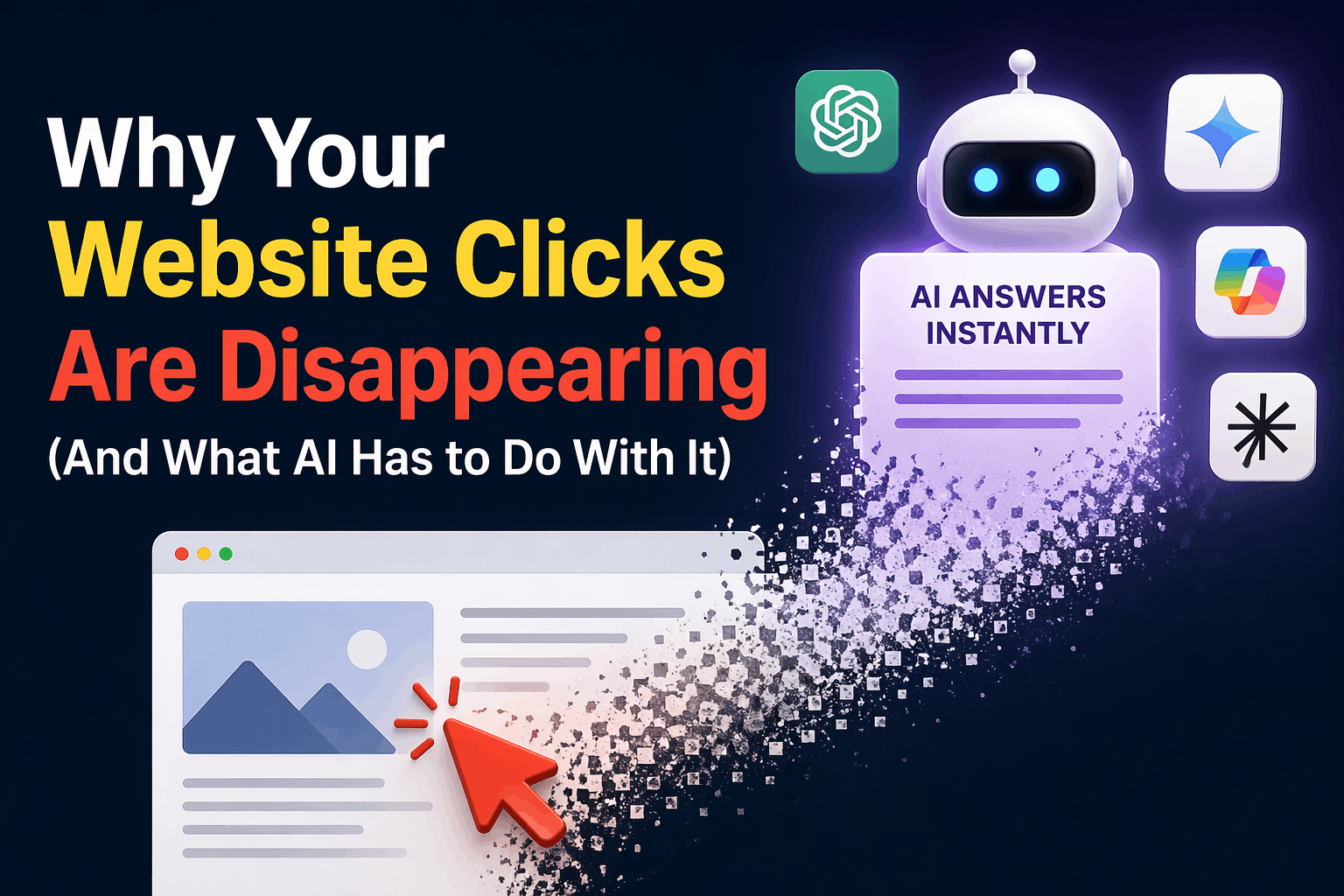
Google rolled out something called AI Overview (previously known as SGE – Search Generative Experience). Now, when you search for something, you often get:
- AI-generated answers right at the top – A complete answer without clicking anything
- Featured snippets on steroids – More detailed, AI-enhanced summaries
- People Also Ask boxes – Expanding answers powered by AI
- Related searches – Smarter, context-aware suggestions
The brutal truth? People are getting their answers without ever visiting your website.
Real Example That’ll Make This Clear
Let’s say someone searches “how to boil an egg perfectly.”
Before AI (2023):
- User sees your blog post titled “Perfect Boiled Eggs in 10 Minutes”
- User clicks your link
- User reads your content
- You get traffic, ad revenue, engagement
After AI (2026):
- User sees AI Overview: “Boil eggs for 6-7 minutes for soft-boiled, 10-12 for hard-boiled…”
- User gets their answer instantly
- User never clicks anything
- You get… nothing
See the problem?
How Bad Is the Damage? (The Numbers Don’t Lie)
Let’s talk real data because this isn’t just theory anymore.
The Click Drop-Off Statistics
Industry research from 2024-2026 shows:
- Zero-click searches (searches where nobody clicks anything) jumped from 25% to nearly 60% in some industries
- Average CTR for position #1 dropped from 30% to around 15-20% in AI Overview-heavy queries
- Informational queries (how-to, what is, why) saw 35-40% CTR decline
Which Industries Got Hit Hardest?
Most Affected:
- Health and medical sites (-45% CTR)
- Recipe and cooking blogs (-40% CTR)
- How-to and tutorial sites (-38% CTR)
- General information sites (-35% CTR)
Less Affected:
- E-commerce and shopping (+5% CTR – people still need to buy)
- Local businesses (0% change – people need addresses, hours)
- Entertainment and news (-15% CTR – people want details)
Why the difference? Simple – AI can answer “what is diabetes” but it can’t help you buy a specific product or find a nearby restaurant’s phone number.
Why AI Overview Is Stealing Your Clicks (The Inside Story)
Let’s break down exactly how this works.
The Anatomy of a Zero-Click Search
Step 1: User types “what is click through rate”
Step 2: Google’s AI scans dozens of top-ranking pages in milliseconds
Step 3: AI generates a complete answer at the top of results
Step 4: User reads the AI summary and leaves – happy, informed, and without clicking your site
What Triggers AI Overview?
Not every search gets AI treatment. Here’s what activates it:
✅ Questions (what, how, why, when) ✅ Definitions (what is, what does, explain) ✅ Comparisons (X vs Y, difference between) ✅ How-to queries (how to make, how to fix)
❌ Navigational (Facebook login, Amazon) ❌ Transactional (buy iPhone 15, cheap hotels NYC) ❌ Local (restaurants near me, plumber in Boston)
Key insight: If your content mainly targets informational keywords, you’re in the danger zone.
The Ripple Effect Nobody’s Talking About
Lower CTR isn’t just about fewer visitors. It triggers a domino effect.
What Happens When Your CTR Tanks?
1. Google Thinks Your Content Sucks
Google watches CTR like a hawk. If people aren’t clicking your result, Google assumes:
- Your title isn’t relevant
- Your content isn’t what people want
- Someone else deserves your spot
Result? Your rankings drop even further.
2. Your Revenue Drops
- Fewer clicks = less ad revenue
- Less traffic = fewer email subscribers
- Fewer visitors = lower affiliate sales
- Reduced engagement = weaker brand presence
3. Your SEO Strategy Breaks
The old playbook:
- Rank for keywords → Get clicks → Get traffic → Make money
The new reality:
- Rank for keywords → AI answers the question → Get zero clicks → Make nothing
How to Fight Back (Strategies That Actually Work)
Okay, enough doom and gloom. Let’s talk solutions.
Strategy #1: Target “Click-Worthy” Keywords
Not all keywords are AI-vulnerable. Focus on:
Transaction-Intent Keywords:
- “best [product] for [need]”
- “buy [product] online”
- “[product] reviews 2026”
- “cheap [service] near me”
Experience-Based Keywords:
- “my experience with [product]”
- “[product] honest review”
- “I tried [method] for 30 days”
- “real results from [approach]”
Deep-Dive Keywords:
- “complete guide to [topic]”
- “advanced [topic] strategies”
- “[topic] case study”
- “step-by-step [process] tutorial”
Why these work: AI can give overview answers, but it can’t replace personal experience, detailed reviews, or comprehensive guides.
Strategy #2: Create “AI-Proof” Content
Make your content impossible to summarize in an AI snippet.
How to do this:
✅ Add unique data – Original research, surveys, case studies ✅ Include visuals – Screenshots, infographics, videos (AI can’t replicate these) ✅ Share personal stories – Real experiences AI can’t generate ✅ Provide tools – Calculators, templates, downloadable resources ✅ Go deep – 3,000+ word comprehensive guides that need clicking to consume
Example: Bad: “How to improve CTR” (AI can answer this in 100 words) Good: “I Tested 47 Title Formulas: Here’s What Actually Improved My CTR by 340%” (requires clicking for full story)
Strategy #3: Optimize for the “Click Anyway” Factor
Even with AI Overview, you can still win clicks.
Title Formula That Works:
[Number] + [Surprising Element] + [Specific Benefit] + [Time Frame/Proof]
Examples:
- “Why 92% of Websites Are Losing Clicks to AI (And 3 Ways to Win Them Back)”
- “I Lost 40% Traffic to AI Overview – Here’s How I Got It Back in 60 Days”
- “The CTR Secret Google’s AI Can’t Tell You (Increased My Clicks 5x)”
Meta Description Tips:
- Start with “Learn” or “Discover” to imply depth
- Include numbers and data
- Mention unique resources (“Free template included”)
- Create FOMO (“Before your competitors find out”)
Strategy #4: Become the Source AI Quotes
If you can’t beat them, become them.
AI Overview pulls information from top-ranking pages. If your content is comprehensive and authoritative, AI will cite you.
How to become AI’s favorite source:
- Answer questions completely – Don’t hold back information
- Use clear structure – Headers, lists, tables (easy for AI to parse)
- Add data and statistics – AI loves citing specific numbers
- Build authority – Get backlinks, mentions, expert credentials
- Update regularly – Fresh content ranks better
The payoff: Even if AI answers the question, it might link to your site as the source, giving you the click.
Strategy #5: Diversify Beyond Google
Don’t put all your eggs in the Google basket.
Alternative Traffic Sources:
- YouTube – AI hasn’t taken over video search yet
- Pinterest – Visual searches still require clicks
- Email list – Direct access to your audience
- Social media – Build community off Google
- Podcasts – Audio content AI can’t replicate
- Direct traffic – Build a brand people remember
What’s Coming Next? (2026 and Beyond)
Let’s peer into the crystal ball.
Predictions for CTR in the AI Era
Short-term (2026-2027):
- Zero-click searches will hit 65-70% for informational queries
- E-commerce and local searches will remain click-heavy
- Google will add more interactive AI features
- Traditional SEO will split into “AI SEO” and “Click SEO”
Medium-term (2027-2029):
- AI will start handling transactional queries better
- Voice search with AI assistants will explode
- “Conversational search” will replace traditional keyword searches
- Google might introduce “verified expert” badges for human-written content
What This Means for You:
- Adapt or die – The “rank and bank” strategy is dead
- Build brand equity – People need to know and trust you beyond Google
- Create unfakeable value – What can you offer that AI can’t?
The Real Question You Should Ask Yourself
Here’s what it boils down to:
Are you creating content for Google, or for humans?
If you’re just trying to rank for keywords and get clicks, AI is eating your lunch.
But if you’re building something genuinely valuable – unique insights, personal expertise, real tools, community, entertainment – clicks will come naturally.
The New SEO Mindset
Old SEO: Rank → Click → Traffic → Money New SEO: Value → Brand → Community → Multiple Revenue Streams
Your Action Plan (Start Today)
Don’t just read this and do nothing. Here’s what to do right now:
Week 1: Audit Your Current Situation
- Check your Google Search Console for CTR trends
- Identify which pages are losing clicks
- See which keywords trigger AI Overview
- Calculate your zero-click search percentage
Week 2: Pivot Your Content Strategy
- Shift from pure informational content to experience-based
- Start creating comprehensive, unique resources
- Add personal stories and case studies
- Build downloadable tools and templates
Week 3: Optimize for Clicks
- Rewrite titles using the formulas above
- Update meta descriptions
- Add unique data and visuals
- Create “scroll triggers” that make people want to click
Week 4: Build Your Moat
- Start email list building seriously
- Create a YouTube channel or podcast
- Build social media presence
- Focus on building direct relationships with your audience
The Bottom Line
CTR isn’t dead – it’s just evolving.
AI platforms like Google’s AI Overview have changed the game forever. You can’t fight it. But you can adapt.
The websites that survive are the ones that:
- Create genuinely unique value
- Build brand recognition
- Diversify traffic sources
- Focus on serving humans, not gaming algorithms
One More Thing…
Still seeing your CTR drop? You’re not alone. This is the biggest shift in search since Google launched.
The winners in this new era won’t be the ones who optimize hardest for Google. They’ll be the ones who build something so valuable, people seek them out directly.
So here’s my challenge to you: Stop obsessing over rankings. Start obsessing over the value you create.
Because in a world where AI can answer any question, the only moat is being irreplaceable.
What’s your next move?Need help adapting your SEO strategy for the AI era? As an SEO freelancer in Bangalore, I help businesses recover lost traffic and build AI-proof content strategies that actually drive clicks and conversions.
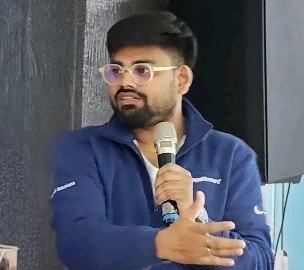
I am Abhijeet Banerjee a dedicated SEO Specialist focused on driving organic growth and improving search visibility. I use a data-driven approach to technical SEO, content strategy, and link building to deliver measurable results and increase ROI for clients and projects