
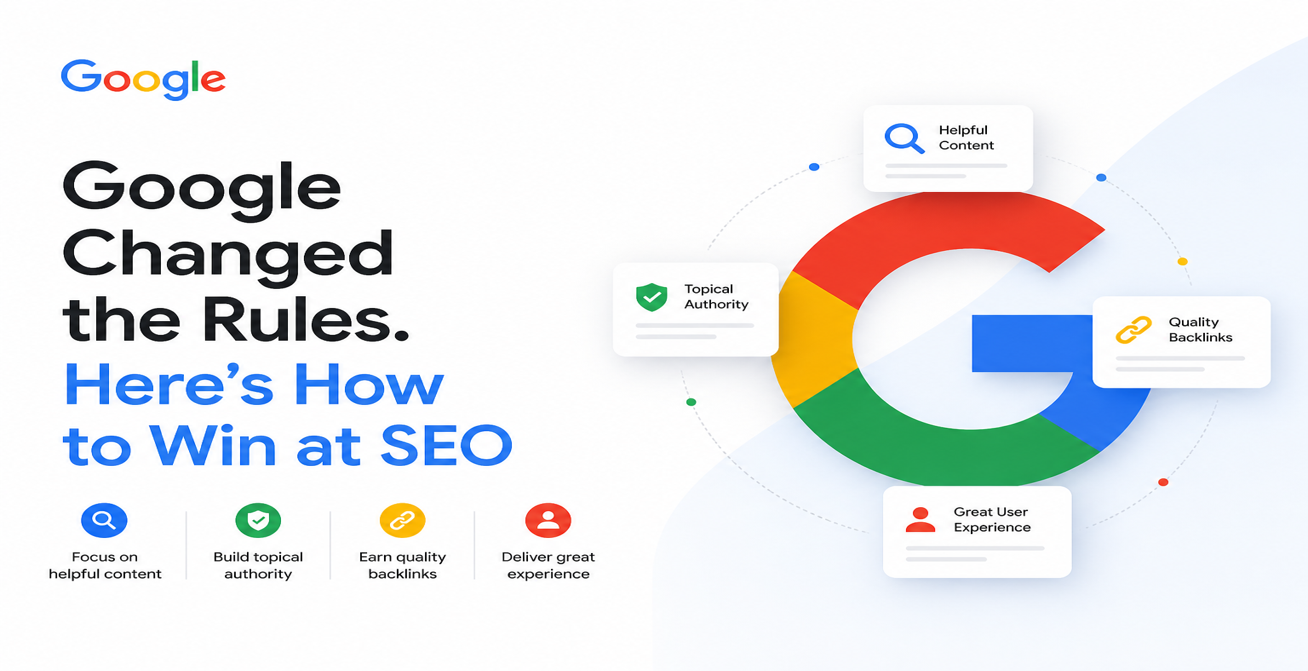
The Complete 2025 Playbook
Google Changed the Rules.
Here’s How to Win at SEO Anyway.
AI Overviews are stealing clicks. Zero-click searches are everywhere. And the old “just rank #1” advice? It doesn’t work anymore. Here’s what actually does.
Look, I’m going to be straight with you. If you learned SEO even two years ago, a lot of that knowledge still works — but a lot of it doesn’t. Google is no longer just a search engine. It’s becoming an answer engine. And that changes everything about how you need to play the game.
01
What Actually Changed (and What Didn’t)
Let’s start with the big picture because a lot of people are confused right now — and honestly, the confusion is understandable.
Google rolled out something called AI Overviews (they used to call it SGE — Search Generative Experience). It’s that big blue AI-generated answer box that appears at the top of Google results before any website links. Google’s AI reads hundreds of pages, pulls the best information, and gives the user a summary — right there, without them needing to visit anyone’s website.
So the first question everyone asks is: does SEO even matter anymore?
Yes. Absolutely. But it works differently now.
| Before AI Google | AI-First Google (Now) |
|---|---|
| old Rank #1 for any keyword → get clicks | now AI Overview answers simple queries → fewer clicks |
| old More content = more traffic | now Better, more trustworthy content = more citations in AI |
| old Backlinks = authority | now Backlinks + author credibility + real experience |
| old Match the keyword exactly | now Answer the intent behind the keyword deeply |
| old Any website can rank with enough links | now Known authors, real brands, proven expertise win |
The fundamental shift is this: Google is trying to give people the best possible answer as fast as possible. Your job is to be the source that answer comes from — or to provide something the AI can’t: depth, real experience, and a genuine point of view.
02
AI Overviews — Your New Best Friend or Worst Enemy?
Here’s something that might surprise you: getting cited in an AI Overview can actually be better than ranking #3 or #4 in regular search results. When Google’s AI uses your content as a source, it often shows your website name right there in that big box — with a link. And people click those links because they trust them.
So the question isn’t “how do I avoid AI Overviews?” The question is “how do I get inside them?”
How to get your content cited in AI Overviews
- Write clear, direct answers at the top of your page. Google’s AI looks for content that answers the question cleanly in the first 2-3 paragraphs. Don’t bury the answer. Say it clearly, then elaborate.
- Use structured data and proper HTML headings. H2s and H3s help the AI understand your content structure. FAQ schema is especially powerful right now.
- Be specific with numbers, dates, and facts. AI Overviews prefer content that has concrete, verifiable information. “Studies show…” doesn’t cut it. “A 2024 Stanford study found that 73% of…” does.
- Cover the topic completely. If someone asks about topic A, and your page also covers the common follow-up questions B and C, the AI is more likely to pull from you because you’re the most complete source.
- Build trust signals on the page. Author bio, publication date, references to original research — all of this signals to Google’s AI that your content is the real deal.
03
E-E-A-T — Why Google Wants to Know Who You Are
You’ve probably heard of E-A-T. Google added an extra E recently, making it E-E-A-T: Experience, Expertise, Authoritativeness, and Trustworthiness.
This is not just a checkbox thing. It’s Google fundamentally saying: we don’t just care what you wrote, we care who wrote it and whether they’ve actually lived it.
Breaking down each letter
Have you actually done the thing you’re writing about? A travel blog where the author has been to every place they recommend beats a listicle scraped from other websites, every single time. Google looks for first-person experience signals — your photos, your specific stories, your honest opinions.
Are you qualified to talk about this topic? This matters especially in health, finance, and legal content (Google calls these YMYL — Your Money or Your Life topics). A doctor’s health blog ranks better than a random person’s health blog, all else being equal.
Do other credible websites and people recognise you as a source worth listening to? This is largely about backlinks, press mentions, and being cited by other trusted content in your field.
Is your website safe, honest, and accurate? Clear contact information, an SSL certificate, no misleading claims, correction policies, transparent authorship — all of this adds up.
How to actually improve E-E-A-T on your site
- Create a proper About page that explains who you are, your credentials, and your real-world experience
- Add an author bio with links to the author’s social profiles (especially LinkedIn)
- Link to your original research, your case studies, your client results
- Get quoted or mentioned in other publications in your industry
- Show reviews, testimonials, or portfolio work right on the site
- Update old content regularly and show the “last updated” date
“The best SEO strategy in 2025 is to be genuinely the most trustworthy, most experienced person on the internet for your topic. Google is trying very hard to figure that out automatically.”
04
Keywords Are Dead. Long Live Intent.
Okay, “keywords are dead” is a bit dramatic. Keywords still matter. But the way you think about them needs to completely change.
Old approach: find keyword → stuff it on the page 20 times → rank.
New approach: understand what the person behind the search actually wants → answer that completely and helpfully → the right keywords will naturally appear.
The four types of search intent you need to know
Here’s the key insight: informational searches are the ones getting hit hardest by AI Overviews. Transactional and commercial searches? Still driving clicks like crazy. If you want traffic that converts to business, focus on the bottom two types above.
How to do keyword research the 2025 way
- Look at “People Also Ask” boxes — Google is literally showing you what people want to know next. Each PAA item is a content opportunity.
- Use forums and Reddit — Real people asking real questions in their real words. These phrases often have much less competition than the official “keyword tool” terms.
- Target long, specific phrases — “SEO tips” is too broad. “How to get local service business to rank on Google without a big budget” is specific, answerable, and has real user intent.
- Look at what your competitors rank for and find the gaps — Use tools like Ahrefs, Semrush, or even free tools like Ubersuggest.
05
How to Write Content Google Actually Picks
This is the section most people skip because they think they know how to write content. But there’s a specific formula that works right now, and it’s worth understanding properly.
The anatomy of a page that ranks in 2025
1. Answer the main question in the first 100 words. Don’t make people scroll to find the answer. Say it clearly right away. This is what gets you into AI Overviews.
2. Add context, nuance, and real depth. The AI gave a quick answer — you give the full picture. Your job is to be the content people read when they want to truly understand the topic, not just get a surface answer.
3. Include real examples from your experience. “I tried this with a client in the manufacturing space and here’s what actually happened…” This is gold. AI can’t generate this. Google can’t fake this. Only you have it.
4. Address the follow-up questions naturally. What does someone wonder about after getting the main answer? Answer those too. This is how you cover a topic completely.
5. Close with a clear next step or takeaway. What should the reader do now? Make it easy for them to act.
Content formats that are crushing it right now
- Original research and data. Even small surveys. Even data you pulled from your own client work (with permission). Nobody else has it, so you automatically own that content space.
- Comparison and “versus” content. “Tool A vs Tool B” searches are exploding because AI Overviews don’t do comparisons particularly well — they tend to be wishy-washy. Your clear, opinionated comparison can win here.
- Case studies with real numbers. “How I grew a client’s organic traffic by 280% in 6 months” — with actual screenshots, actual data, actual challenges. This content builds trust and gets shared.
- Process content. Step-by-step guides that go deep — not “5 quick tips” but “here is the exact process, done in the right order, with the gotchas explained.” People bookmark this.
06
Technical SEO — The Stuff That Still Matters
Technical SEO hasn’t changed as dramatically as content strategy, but it’s still the foundation. If Google can’t crawl your site, nothing else you do matters.
The non-negotiables in 2025
- Page speed. Google measures Core Web Vitals — especially how fast your page loads on mobile. If your page takes more than 3 seconds to load, you’re losing both rankings and visitors. Use Google PageSpeed Insights to check and fix.
- Mobile-first design. Google indexes the mobile version of your site. If your site looks bad on a phone, you’re being ranked on that bad mobile experience. Non-negotiable in 2025.
- Structured data (Schema markup). This is code you add to your pages that helps Google understand what your content is about — is it a product, a recipe, a review, an FAQ? The FAQ schema in particular helps get your content into featured snippets and AI Overviews.
- Clean site architecture. Important pages should be reachable from your homepage in 2-3 clicks. Use internal linking generously — it helps Google understand which pages matter most on your site.
- Fix broken links and redirect chains. Broken pages bleed your SEO authority. Audit your site once a quarter with a tool like Screaming Frog or Sitebulb.
The newer technical stuff worth knowing
IndexNow protocol: A new way to instantly tell Google (and Bing) when you’ve published or updated content. Instead of waiting for Google to find your new article, you tell it immediately. Most good CMS plugins now support this.
Rendering JavaScript correctly: If your website uses lots of JavaScript to display content, Google needs to be able to “run” that JavaScript to see the content. Many modern websites have rendering issues they don’t even know about. Check the URL Inspection tool in Google Search Console to see what Google actually sees on your pages.
07
Links in 2025 — Quality Over Literally Everything
Backlinks are still one of Google’s strongest ranking signals. But the nature of what counts as a good backlink has shifted dramatically.
One genuinely relevant link from a trusted website in your industry is worth more than 500 links from random directories or low-quality blogs. Google has gotten incredibly good at detecting paid link schemes, and the penalties are severe.
How to earn real links in the AI era
- Original data and research — journalists and bloggers need statistics to cite. If you publish original data, they’ll link to you. This is the highest-ROI link building strategy right now.
- Digital PR — Write genuinely interesting content, then pitch it to journalists and bloggers in your space. Not “here’s my article, please link to it.” More like “here’s a surprising finding from my research that your readers would love.”
- Broken link building — Find broken links on websites in your niche (links pointing to pages that no longer exist), then suggest your content as a replacement. You’re helping them fix their site; they’re giving you a link.
- Guest posts on genuinely relevant sites — Write for publications your target audience actually reads. Don’t guest post on random blogs just for the link. Relevance matters more than ever.
- Build a brand people want to reference — The ultimate link building strategy is being so good at what you do that people mention and link to you naturally. Podcast appearances, speaking gigs, visible community participation — all of this creates organic mentions.
08
Local SEO + AI — A Huge Opportunity Nobody’s Fully Using
If you run a local business or you help local businesses with their marketing, this section is especially important because local SEO in the AI era is actually a massive opportunity.
Here’s why: AI Overviews show up less for local searches. When someone searches “best dentist in Indiranagar” or “digital marketing agency in Koramangala,” Google still mostly shows Google Maps listings and local website results. Not AI summaries. Local search is one of the last places where traditional SEO gives you a clean, uncluttered path to visibility.
Local SEO basics that every business needs in 2025
- Google Business Profile — treated like a full content platform. Add posts every week. Respond to every review. Upload real photos of your work, your team, your space. Use every available section. The businesses that treat GBP like a social media profile consistently outrank those who just set it and forget it.
- NAP consistency. Your Name, Address, and Phone number must be exactly the same across your website, GBP, Justdial, Sulekha, IndiaMART, and any other directory you’re listed on. Even small differences (like “St.” vs “Street”) can hurt your local rankings.
- Local landing pages. If you serve multiple areas, create a dedicated page for each. A page titled “SEO Services in Whitefield, Bangalore” with real, helpful content about that area will rank far better than a generic services page.
- Reviews as an SEO strategy. More recent, genuine reviews = better local rankings. Build a system for asking happy clients to leave reviews. Respond to negative reviews professionally — how you respond says as much about your business as the review itself.
09
How to Measure SEO Success When Clicks Are Dropping
This is a genuinely tricky problem. Organic clicks are down for many websites — not because their SEO got worse, but because AI Overviews are answering more questions without people clicking. So how do you know if your SEO is actually working?
The new metrics that matter
- Impressions, not just clicks. Check Google Search Console. If your impressions (how often you appear in search results) are growing even while clicks dip, your visibility is actually increasing. People see you, even if they don’t always click. That builds brand recognition.
- Brand search volume. More people searching your brand name directly means your SEO and content is working — they’re finding you through AI, social, or word of mouth, and coming back to find you specifically.
- Engagement metrics. Time on page, scroll depth, pages per session — if people are reading your content and going deep into your site, that’s a signal you’re attracting the right visitors who genuinely want what you offer.
- Conversions and leads from organic, not just raw clicks. 1,000 highly targeted visitors who convert at 5% beats 10,000 random visitors who convert at 0.2%. Track leads, calls, form fills, and purchases from organic traffic separately.
- AI citation tracking. New tools are emerging that track whether your content appears in AI Overviews. Keep an eye on tools like SE Ranking, Semrush’s AI Toolkit, and BrightEdge for this.
10
Your Action Plan — What to Do This Week
All this information is useful only if it leads to action. So here’s a practical, prioritised plan you can start today.
1. Audit your Google Search Console. Check your top 20 pages. Are impressions growing even if clicks are dipping? Which pages have high impressions but low click-through rates? Those pages need better title tags and meta descriptions.
2. Pick one topic you genuinely know better than most people. Write one piece of content that answers that topic completely — with your real experience, your real numbers, your real opinion.
3. Update your About page and author bios. Make it crystal clear who you are, why you’re qualified, and what real experience you bring to your subject matter.
4. Add FAQ schema to your top 5 pages. Use Google’s Structured Data Markup Helper — it’s free and simpler than it sounds.
5. Run a page speed test on Google PageSpeed Insights for your most important pages. Fix the top 3 issues it flags.
6. Identify 10 long-tail, intent-rich keywords you’re not currently ranking for. Plan one piece of content for each.
7. Create one piece of original data or research. Even a simple survey of 50 customers counts. Publish the findings and reach out to 10 relevant publications or blogs.
8. Build your external presence. Guest post, podcast appearance, conference talk, or a viral LinkedIn post in your niche. The goal is to exist on the internet beyond just your own website.
9. Review and refresh your top 10 existing articles. Add newer data, better examples, cleaner structure. Google loves updated content — and it’s faster than writing from scratch.
The businesses and creators who thrive in this new world aren’t the ones who found a clever hack. They’re the ones who committed to being genuinely, demonstrably the best source of information and help in their space. Google is just getting better at finding those people — and sending traffic their way.
Looking for an SEO Freelancer in Bangalore?
If you’re a business in Bangalore — whether you’re in Koramangala, Whitefield, Indiranagar, or anywhere else in the city — and you’re trying to navigate this new AI-first Google landscape, you don’t have to figure it out alone.
A good SEO freelancer in Bangalore who understands both the local market and the latest AI-driven changes to Google can be the difference between a website that sits invisible and one that consistently brings you qualified leads.
Bangalore’s market is competitive — IT companies, startups, D2C brands, local service businesses — everyone is fighting for the same digital space. The edge goes to businesses with an SEO strategy built for 2025, not 2019.
Whether you need a full SEO audit, content strategy, local SEO for your Google Business Profile, or someone to build your organic traffic from scratch — working with a Bangalore-based SEO specialist who knows the tools, the terrain, and the latest Google updates gives you a meaningful advantage. The best time to start was yesterday. The second-best time is right now.
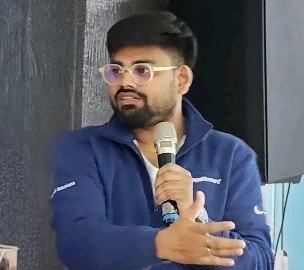
I am Abhijeet Banerjee a dedicated SEO Specialist focused on driving organic growth and improving search visibility. I use a data-driven approach to technical SEO, content strategy, and link building to deliver measurable results and increase ROI for clients and projects
Leave a Reply