
When people talk about SEO, most start with keywords, meta tags, or title optimization.
But here’s the truth: even if your on-page SEO is perfect, without off-page optimization, your website might still stay invisible on Google.
So, what is off-page optimization?
Let’s break it down step by step — in the simplest words possible.
What Is Off-Page Optimization?
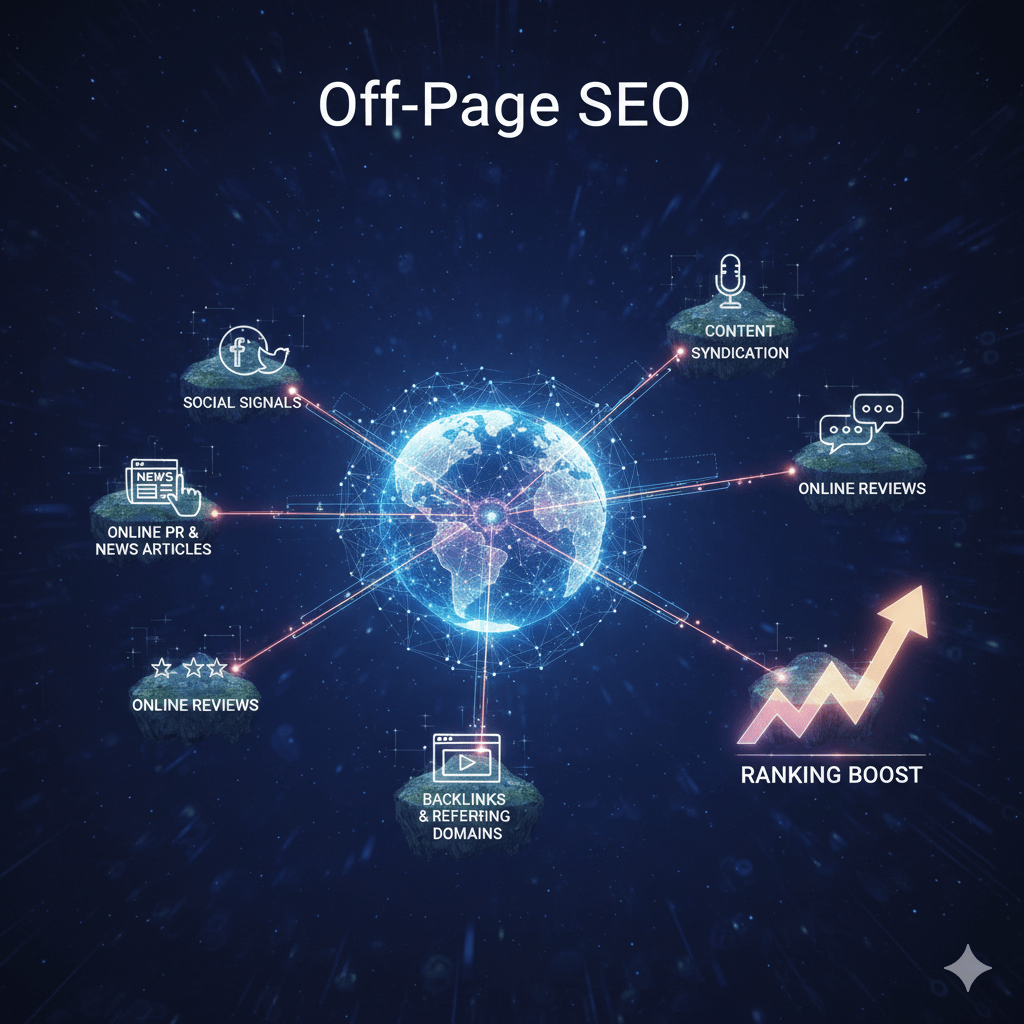
Off-page optimization means improving your website’s reputation and authority by doing things outside your website.
Think of it like this:
If your website is a shop, then off-page SEO is how much trust and word-of-mouth your shop gets from others.
The more people talk about you online, recommend you, and link to your site, the more Google believes you’re trustworthy and valuable.
Why Off-Page SEO Is So Important
Google doesn’t just look at your content — it looks at how other websites see you.
That’s why backlinks, mentions, reviews, and engagement on social media matter a lot.
Here’s why it’s important:
- Helps build authority: The more trusted websites link to you, the more authority you gain.
- Drives referral traffic: Backlinks bring real visitors to your site.
- Improves rankings: Google sees backlinks as votes of confidence.
- Builds your brand’s online reputation.
If you’re running a business and want to improve your website ranking, investing in professional help — like our SEO services in Bangalore — can make your off-page strategy stronger and more effective.
The Most Important Off-Page SEO Techniques (Explained Simply)
Let’s go through the key techniques one by one.
1. Link Building (The Heart of Off-Page SEO)
This is the most talked-about off-page activity — and for good reason.
Link building means getting other websites to link to yours.
These links act like votes that tell Google your site is useful and credible.
But remember — quality > quantity.
A single link from a trusted site (like a news website or industry blog) is way more valuable than 100 random ones.
Simple ways to build links:
- Write helpful guest blogs
- Share your expertise on forums or Q&A sites
- Get listed on business directories
- Create shareable infographics
- Collaborate with influencers or local bloggers
2. Social Media Engagement
Your activity on social media also affects how people and search engines see your brand.
When people share, like, or comment on your content, it creates social signals — a sign of trust and engagement.
So, be active where your audience hangs out — Instagram, LinkedIn, Twitter, or YouTube.
Share helpful content, reply to comments, and join conversations.
This helps you build a community around your brand.
3. Guest Posting
Guest posting is when you write articles for other websites or blogs.
In return, you usually get a link back to your own website.
It’s a win-win:
- You share valuable knowledge with new readers.
- You get backlinks and visibility for your brand.
Make sure you post only on relevant and high-quality websites — that’s what makes it truly effective.
4. Online Reviews and Ratings
If you run a local business, this one’s gold.
Reviews on Google My Business, JustDial, or Yelp can impact your website ranking and your customers’ trust.
Quick tip:
Always ask happy customers to leave reviews — and reply politely to both good and bad ones.
It shows you care, and it builds trustworthiness (the T in EEAT).
5. Brand Mentions
Even if a website doesn’t link to you, just mentioning your brand name can help.
Google picks up brand mentions as a sign of credibility.
So, being talked about online (positively, of course!) is a great sign your business is growing.
You can encourage this by:
- Collaborating with bloggers
- Doing PR campaigns
- Getting featured in news articles
6. Forums and Q&A Participation
Join forums or communities like Reddit, Quora, or industry-specific groups.
Answer people’s questions genuinely and share your knowledge.
When people find your answers helpful, they may check your profile or website.
This builds your expertise (E in EEAT) — and drives organic traffic naturally.
7. Influencer and Content Collaboration
Partnering with influencers or content creators in your niche is another great off-page tactic.
It helps you reach a wider audience and gain trust through association.
When a known face talks about your brand, people (and Google) take it seriously.
How Off-Page SEO Builds EEAT
Google’s EEAT update focuses on ranking content that’s:
- Written by real experts (Experience, Expertise)
- Published by credible brands (Authoritativeness)
- Trusted by users and other sites (Trustworthiness)
Off-page SEO directly helps here because:
- Backlinks = trust signals
- Mentions = authority
- Reviews = trustworthiness
- Guest posts = expertise
That’s why off-page optimization isn’t just about links anymore — it’s about building your brand’s online reputation and credibility.
Pro Tip: Combine On-Page + Off-Page SEO
Think of SEO like a car.
- On-page SEO is the engine — it keeps things running.
- Off-page SEO is the fuel — it helps you move faster and further.
If you only focus on one, your growth will be limited.
But when both work together, your website can truly take off.
Want to Boost Your Website’s Authority and Rankings?
If you’re serious about growing your website traffic, building trust, and ranking higher on Google, you need a strong off-page strategy.
Our SEO services in Bangalore are designed to help businesses like yours grow faster with a mix of ethical link-building, content marketing, and local SEO.
We don’t chase shortcuts — we build long-term results that align with Google’s EEAT principles.
Final Thoughts
Off-page optimization isn’t about doing everything at once — it’s about being consistent.
Build good relationships online, share value, and earn people’s trust.
Because when the internet starts talking about your brand, Google listens.