
You’ve been publishing content. Maybe even a lot of it. But if your traffic has quietly dropped in the last few months — this is the article you needed six months ago.
Let’s be real for a second.
When AI writing tools exploded, everyone thought the same thing: “More content = more traffic.” People were pumping out 50 articles a week. Entire websites were built on nothing but AI-generated text. It felt like a hack that was too good to be true.
Turns out — it was.
Google’s March 2024 Core Update already cut so-called “unhelpful” content by 40%. And the 2026 standards build directly on that benchmark. Then came the March 2026 Core Update — and the internet shook. It moved 79.5% of Top-3 positions, making it the most volatile update ever measured to date. SEO VendorSEO-Kreativ
Sites that were riding high? Gone overnight.
And the ones that survived? They all had one thing in common — strong E-E-A-T signals.
So if you’ve been hearing this term thrown around and nodding like you understand it but secretly thinking “okay but what do I actually DO” — you’re in the right place. Let’s break this down like two people having coffee, not like a 176-page Google document nobody reads.
First — What Even Is E-E-A-T? (No Jargon, Promise)
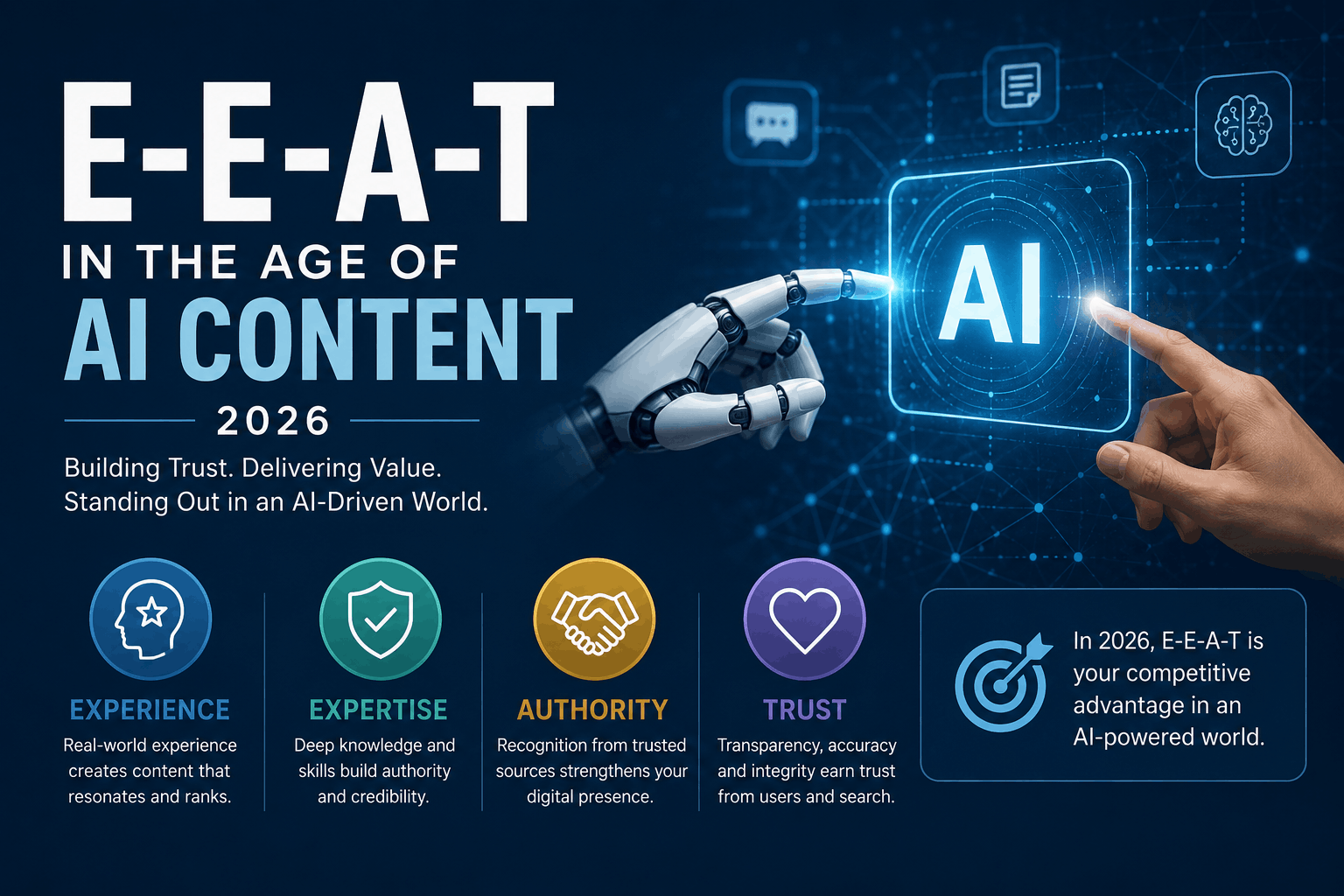
E-E-A-T stands for Experience, Expertise, Authoritativeness, and Trustworthiness.
Google uses this framework to decide one thing: “Should we show this content to people, or is it just noise?”
Think of it like a job interview. You can dress well and say the right things. But a good interviewer will figure out pretty fast whether you’ve actually done the work or just memorized the right answers.
Google is now that interviewer. And it’s gotten really, really good at spotting the difference.
AI has lowered the barrier to publishing, but it has also raised the bar for trust. It’s now easy to create content that looks convincing without being grounded in real experience. Google anticipated this and has become sharper at filtering out pages that feel manufactured. Keywords Everywhere
Here’s the thing most people miss — E-E-A-T is not a score. Google’s own documentation confirms that E-E-A-T itself is not a specific ranking factor. It’s a quality framework that Google’s systems are trained to detect through underlying signals including author credentials, content accuracy, reputation, and entity relationships. Redot Global
So you can’t “optimize” for it the way you’d stuff a keyword. You have to actually earn it. Let’s talk about how.
The First “E” — Experience (This Is the One AI Cannot Fake)
This is the newest addition to the framework. Google added it in 2022, and in 2026, it’s arguably the most important one.
Experience means: Has the person who wrote this actually lived it?
Not read about it. Not summarized other sources about it. Actually done it.
Google’s March 2026 core update amplified the first E in E-E-A-T beyond all previous signals. Content that demonstrates genuine first-hand experience through specific details, original outcomes, and verifiable author credentials outranks comprehensive but impersonal information pages. Digital Applied Team
Here’s a simple example. Say two articles both explain “how to run Facebook ads.”
Article A is well-written, covers all the basics, has good structure. But it could have been written by anyone who read three other articles.
Article B says: “I ran a ₹40,000 campaign in November 2024 targeting 25–35 year-olds in Tier 2 cities. Here’s what our cost-per-click looked like in week one vs week three, and here’s the mistake I made with lookalike audiences that cost me ₹8,000.”
Google can tell the difference now. And so can your reader.
Clear author bios, original photos or videos, documented processes, and real examples all help signal that your content comes from lived involvement, not just research. Keywords Everywhere
What this means for you practically:
- Share your actual numbers, even when they’re messy
- Talk about mistakes — not just wins
- Include screenshots, real results, specific dates
- Write in first person when you have genuine experience to share
The beautiful irony? The things that make your content feel human are exactly the things that make Google trust it more.
The Second “E” — Expertise (It’s Not About Having a Degree)
Okay, so expertise sounds intimidating. Like you need a PhD or 20 years of corporate experience before Google will take you seriously.
That’s not what this means.
Expertise is about depth of knowledge and demonstrated competence. In E-E-A-T SEO, this often appears through detailed author bios, professional credentials, and structured schema markup connecting content to real individuals. Google favors niche-focused sites that repeatedly cover a subject area in depth. HYF Technologies
The key word there is niche. Google doesn’t reward generalists anymore. If your website covers fitness, recipes, personal finance, travel, and tech news — Google doesn’t know what you are. And things Google can’t categorize, it doesn’t trust.
Compare that to a site that only talks about personal finance for freelancers in India. Every. Single. Article. Over two years. That’s a site Google can understand, verify, and trust.
A less-talked-about piece of expertise: your author page matters more than your homepage.
Google’s E-E-A-T framework rewards content attributed to authors with verifiable credentials and a consistent publishing history on the topic. The practical consequence is that anonymous content, or content attributed to generic author profiles with no verifiable track record, is losing ground regardless of its quality. Evertune
So if your blog says “By Admin” or “By Staff Writer” — that is quietly hurting you right now.
What this means for you practically:
- Write a real author bio (name, photo, what you’ve actually done)
- Pick a topic lane and stay in it
- Link your author bio to your LinkedIn, Twitter/X, or other platforms where your expertise shows up
- If you have certifications, mention them — not to brag, but because they’re signals Google can verify
The “A” — Authoritativeness (Why Google Is Basically Googling You)
Here’s something wild that most content creators don’t realize.
Google doesn’t just look at what’s on your website. It looks at what the entire internet says about you.
Are other trusted sources mentioning you? Linking to you? Quoting you? Is your name showing up in industry conversations? Are people searching for you by name?
That’s authoritativeness. And it’s gotten way more sophisticated in 2026.
Content published under a recognized author entity ranks differently than anonymous content. The Google API leak of 2024 confirmed the existence of author-level scoring signals. SEO-Kreativ
Think of it this way. If you tell someone you’re a great chef, that’s a claim. If ten different people bring it up unprompted at a dinner party, that’s authority. Google is essentially attending that dinner party and listening.
Algorithms look across the web to see if other trusted entities “vouch” for the author. This includes citations and mentions — being quoted as an expert in third-party publications, podcasts, or academic papers — and brand search volume, where a high volume of users searching for an author’s name plus their topic signals to the algorithm that the author is a recognized leader. ClickRank
This is why guest posting on relevant sites, being on podcasts, getting quoted in articles — all of that matters so much more now. It’s not just about backlinks. It’s about your name being connected to your topic, across the web, consistently.
A good seo freelancer in Bangalore will tell you the same thing: building authority is a slow game, but once you have it, it compounds like interest.
What this means for you practically:
- Write guest articles for sites in your industry
- Get on podcasts, even small ones
- Comment meaningfully in communities where your audience hangs out
- Make sure your name and bio are consistent everywhere (same photo, same description, same credentials)
The “T” — Trustworthiness (The Foundation Everything Else Sits On)
Google says Trust is the most important piece of the whole E-E-A-T framework. Without it, the other three don’t matter.
And in 2026, trust has taken on a very specific meaning.
Trust signals include: author bylines with credentials on all content, Person and Organization schema implemented, comprehensive About and Contact pages, regular content updates with timestamps, and fact-checking processes for all published content. BKND Development
But here’s what most people don’t write about — trust is also about what you don’t do.
Do you have fake reviews? Misleading headlines that don’t match the article? Broken links? Outdated statistics presented as current? No “About” page? No way to contact you? All of these are quiet trust-killers.
Google’s Quality Raters — real human beings who evaluate search results — are trained to ask: “Would I trust this website with something important?” If the answer is no, that feedback trains the algorithm to agree.
Sites showing the biggest drops share common traits: thin content relevance signals, no clear author authority, weak internal linking structures, and heavy reliance on AI-written content without editorial review. Sites that held steady or gained had consistent topical focus, real expert contributors, well-structured semantic SEO markup, and clean technical foundations. I Create Brand
What this means for you practically:
- Have a real, complete “About” page that tells your actual story
- Show a clear “Contact” page with real information
- Add dates to your content AND actually update them when the content changes
- Cite your sources (like this article does)
- Be transparent about who wrote what and why
The Thing Nobody’s Talking About: The “Author Entity”
This is the 2026 concept that most content out there still isn’t covering properly.
An Author Entity is basically Google’s mental model of who you are.
By 2026, E-E-A-T is something AI systems verify mechanically against external entity graphs. Experience shows up in content as specific operational detail: which platforms were used, which campaigns ran, which dollar figures applied, which mistakes occurred. Wikidata
Here’s the simple version. Google is building a kind of profile for every author it encounters online. Your name, what you write about, who links to you, what platforms you’re on, how consistent your information is across all of them. This profile — your Author Entity — directly affects how your content ranks.
On February 1, 2026, Google added a new Authors section to Search Central documentation — the clearest signal yet that authorship transparency is a direct quality consideration. Redot Global
This is huge. And most people are still ignoring it.
How do you build your Author Entity?
Use one consistent author name, one consistent headshot, one consistent bio across every platform where you publish. Inconsistency is the enemy of entity recognition. Implement Person Schema — structured data markup on your author page — including name, job title, who you work for, and “sameAs” links connecting to your social profiles. SEO-Kreativ
Think of it like building a Wikipedia-worthy trail of breadcrumbs about yourself. Except instead of Wikipedia, you’re building it across LinkedIn, Twitter/X, your website, your guest posts, and anywhere else your name shows up professionally.
Sites with comprehensive Organization schema are 3.7x more likely to earn a Knowledge Panel — a strong signal that Google’s AI systems have successfully mapped your brand as a trustworthy, identifiable entity. SuperGEO
What Actually Happened to AI Content in 2026? (The Real Data)
Let’s talk numbers, because this is where it gets sobering.
Sites with original data gained +22% visibility after the March 2026 update, while AI-paraphrased content lost 71% of its traffic. SEO-Kreativ
Read that again. 71% traffic loss for content that was just AI paraphrasing other sources.
A recent survey from the Content Marketing Institute in Q1 2026 revealed that 70% of consumers reported difficulty distinguishing between human and AI-generated content, but 85% expressed a preference for human-authored content when seeking expert advice. QC Fixer
So readers can’t always tell — but they prefer human voices when it matters. And Google knows this. Which is why it’s working overtime to surface those human voices.
Google’s spam detection has grown sharp enough to flag generative AI content that lacks real editorial oversight or genuine expertise signals. It won’t reward pages that simply produce volume without depth or verified authorship. SEO Vendor
Here’s the important nuance though — Google is not against AI content. It’s against lazy AI content. There’s a big difference.
How to Use AI Without Getting Penalized (The Right Way)
This is the question everyone’s actually asking. And the honest answer is: AI is fine. Just not as the main character.
AI-generated content can coexist with E-E-A-T when anchored to real experience. Sites that use AI to expand on genuinely experienced content — drafting sections around real case studies, adding context to original data — largely maintained or improved rankings. Sites that replaced experience with AI-generated generalities were penalized most severely. Digital Applied Team
So the model that works looks like this:
You bring the experience and the unique angle. AI helps you write it faster.
You do a real product test. AI helps you structure the write-up. You share your actual opinion and original data. AI helps you clean up the grammar. You write the introduction from your gut. AI helps you fill in the supporting sections.
Content that is assisted by AI and substantially edited by a named human expert, grounded in original perspective and attributed with verifiable credentials, performs well. The March 2026 update does not penalize AI-assisted content categorically. Evertune
The fatal mistake is starting with AI and never adding yourself to it. That’s when you end up with content that looks like it says something but doesn’t actually say anything.
YMYL — The Strictest Zone (Health, Money, Legal, Life Advice)
If your content falls into any of these categories — health, finance, legal advice, safety, mental health — the E-E-A-T bar is not just higher. It’s in a completely different building.
YMYL stands for “Your Money or Your Life.” Google treats this content with extreme care because bad advice in these areas can genuinely hurt people.
YMYL websites — covering health, personal finance, legal advice, and medical topics — took the hardest hits in the April 2026 update. These industries face the strictest Google quality rater guidelines evaluation, and any gap in E-E-A-T signals becomes a liability quickly. I Create Brand
What does this mean practically?
If you run a health blog, your author needs to be an actual medical professional — or content needs to be reviewed by one, with that review documented. If you write about investing, your credentials need to be visible and verifiable. A disclaimer like “not financial advice” is not enough anymore.
The September 2025 update also added a brand-new chapter to Google’s Quality Rater Guidelines specifically for evaluating AI-generated content — the first time this has happened. The YMYL category “Society” was renamed to “Government, Civics & Society,” and the document’s scope expanded to cover Google’s evolving search features. SEO-Kreativ
YMYL is not a space for anonymous writing, AI summaries, or hobby blogs anymore. If you’re in this space, treat every article like your professional reputation depends on it. Because according to Google — it does.
E-E-A-T and AI Overviews — The New Battleground
Here’s something most 2026 content pieces are skipping over entirely.
Google’s AI Overviews — those summarized answer boxes that now appear at the top of search results — are powered by the same E-E-A-T logic. The E-E-A-T signals that drive AI citations are not the same ones you’ve been building for Google rankings. Domain authority’s correlation with AI citations has dropped to r=0.18, making it nearly irrelevant. Author credentials, structured data, and entity consistency are what’s actually moving AI citation rates in 2026. SuperGEO
This is the part that should make every content creator sit up straight.
All the old “get backlinks from high DA sites” advice? Still somewhat useful for rankings. But for getting cited inside AI Overviews? It barely moves the needle.
What does move the needle? Being a verifiable, consistent, credentialed author. Having structured data on your pages. Writing content that directly answers questions in clear, extractable language.
Content structured for clean extraction — short paragraphs, direct answers, FAQ schema — gets pulled more reliably than dense prose. SuperGEO
In other words: write clearly, be specific, answer the question early, and make sure Google knows exactly who wrote it and why they’re qualified.
The “Information Gain” Secret — Why Original Thinking Beats Everything
Here’s a concept that is massively underrated in SEO conversations right now.
Google has a patent called the Information Gain Score. The idea is simple but the implications are huge.
Google’s March 2026 update re-weighted what the SEO community calls Information Gain — a ranking signal that measures how much genuinely new knowledge a piece of content adds relative to what already ranks for the same query. Evertune
So it’s not just “is this content good?” It’s “does this content say anything that isn’t already out there?”
This is why 1,000 articles that all cover the same SEO basics are worth less than one article that shares a real experiment, a fresh perspective, or data that nobody else has published.
It’s no longer enough to produce AI-written text that simply restates what other sources already say online. SEO Vendor
This changes how you should approach content creation. Before you write, ask yourself: “What do I know about this topic that nobody else is saying?”
Your personal story. Your failed experiment. Your counterintuitive take. Your niche-specific case study. Your real numbers from a campaign that actually ran.
That stuff is gold in 2026. Not because it’s “better” in some vague way — but because it is, by definition, information Google hasn’t indexed from a thousand other sources. It’s genuinely new. And Google rewards new.
The Quick Checklist — What You Can Do This Week
You don’t have to overhaul everything overnight. But here are the most impactful moves right now:
For your author profile:
- Add a real photo and bio to every article you’ve written
- Make sure your name is identical everywhere — website, LinkedIn, Twitter/X, guest posts
- Add Person Schema to your author page (your developer or a good SEO plugin can do this)
For your content:
- Go back to your top 10 articles and add a “Personal Experience” section with real specifics
- Update any outdated statistics (2022 data presented as current is a trust problem)
- Add a “Last Updated” date when you genuinely update something
For your site:
- Write a real About page that tells your actual story
- Make sure your Contact page has real information
- If you’re in a YMYL niche, get your content reviewed by a credentialed professional and document it
For authority:
- Reach out to one publication in your industry this week about contributing an article
- Engage meaningfully in two or three online communities where your audience asks questions
- Look for podcast opportunities — even small ones count
The Honest Takeaway
Here’s the thing about E-E-A-T in 2026 that nobody wants to say out loud:
It’s actually not that complicated. It just requires you to do the harder thing.
Be a real person. Share real experience. Write about things you actually know. Build a reputation that exists outside your own website. Be consistent. Be honest. Don’t hide behind a brand name with no humans attached to it.
All of that has been good advice for decades. Google has just now built a system sophisticated enough to reward it at scale.
Much tougher treatment of scaled, low-value AI content and spammy practices, and more emphasis on helpfulness, experience, and trust — not just keywords and links — is what staying ahead in 2026 requires. Saffronedge
The writers and creators who will win the next few years are not the ones with the most content. They’re the ones with the most credibility. The ones who write less but mean more. The ones whose name actually stands for something in their corner of the internet.
AI can write 10,000 words in five minutes. It still cannot replace a person who has genuinely lived through something and is generous enough to share what they learned.
That’s your edge. Don’t give it up chasing volume.
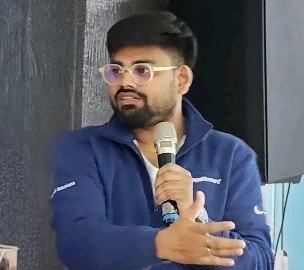
I am Abhijeet Banerjee a dedicated SEO Specialist focused on driving organic growth and improving search visibility. I use a data-driven approach to technical SEO, content strategy, and link building to deliver measurable results and increase ROI for clients and projects