

Introduction: The SEO Game Is Changing Fast
If you’ve been doing SEO for a while, you’ve probably noticed things aren’t working the same way anymore. Google isn’t just about keywords, backlinks, and meta tags like it used to be. Now, it’s about understanding intent, predicting behavior, and personalized search experiences.
That’s where AI Search Optimization comes in — the next generation of SEO driven by artificial intelligence.
In this guide, let’s break down in simple words what’s the difference between traditional SEO and AI Search Optimization, how both work, and which one can help your website grow faster in today’s smart search world.
1. What Is Traditional SEO? (The Classic Way of Ranking)
Traditional SEO is the old-school way of improving a website’s visibility on Google.
It focuses mainly on:
- Keywords – adding the right words people search for.
- On-page SEO – optimizing titles, meta descriptions, and headings.
- Off-page SEO – building backlinks from other websites.
- Technical SEO – improving site speed, fixing errors, and making it mobile-friendly.
Back then, search engines weren’t very “smart.” They relied heavily on these signals to understand what a page was about. So, if you did your keyword research and added them in the right places, you could rank well.
👉 Example:
If someone searched “best digital marketing agency,” and your page had that keyword several times with some backlinks, you could easily rank on page one.
But now, things are changing because Google itself has become smarter — thanks to AI.
2. What Is AI Search Optimization? (The Smarter Evolution of SEO)
AI Search Optimization means using artificial intelligence to improve how your website appears and performs in search.
It’s not just about adding keywords — it’s about understanding user intent, creating value-driven content, and leveraging data to predict trends and behaviors.
Here’s what it involves:
- AI-driven content optimization: Tools like Surfer SEO or Clearscope analyze top-ranking pages using AI and help you write better content.
- Predictive analytics: AI studies patterns to predict what users will search next.
- Personalized search results: AI understands users individually — their location, interests, and behavior — to show more relevant results.
- Voice and visual search readiness: AI-powered searches include voice commands (“Hey Google…”) and image-based searches.
👉 Example:
If someone asks Google, “Which SEO strategy is best for my startup?”
AI doesn’t just look for pages with those keywords. It checks which content gives real answers, covers the context, and has trust signals (EEAT: Experience, Expertise, Authoritativeness, and Trustworthiness).
That’s where AI Search Optimization beats traditional SEO.
3. The Core Difference Between Traditional SEO and AI Search Optimization
| Aspect | Traditional SEO | AI Search Optimization |
| Focus | Keywords & backlinks | User intent & content quality |
| Search Engine Understanding | Rule-based (keywords, tags) | Context-based (AI learns meaning) |
| Content Creation | Manual keyword writing | AI-assisted data-driven content |
| Ranking Factors | Technical SEO + links | Behavioral data + semantic understanding |
| Tools Used | Google Keyword Planner, SEMrush | ChatGPT, Surfer SEO, Jasper, RankIQ |
| Updates | Manual updates for algorithms | AI adapts automatically to search trends |
| Search Type | Text-based | Voice, visual, and conversational |
| Outcome | Good for short-term ranking | Great for long-term authority building |
4. How AI Has Changed the Way Google Works
Google has been integrating AI for years. Updates like RankBrain, BERT, MUM, and Gemini (Search Generative Experience) show how serious Google is about understanding what people mean rather than just what they type.
Here’s how AI impacts SEO today:
- RankBrain (2015): Helped Google understand user intent and context.
- BERT (2019): Focused on understanding natural language.
- MUM (2021): Helps Google answer complex questions across multiple formats (text, images, videos).
- SGE (Search Generative Experience) (2023+): AI answers directly on Google, summarizing information like ChatGPT.
👉 So now, SEO is no longer about “how many times you use a keyword.”
It’s about how well your content answers a user’s question naturally, clearly, and completely.
5. Why Traditional SEO Alone Doesn’t Work Anymore
Let’s be real — traditional SEO still matters. But it’s not enough anymore.
Here’s why:
- Search intent is deeper: People ask long, conversational questions now.
- AI-generated search results: Google shows summaries and snippets — not just website links.
- More competition: Everyone is using SEO basics. Only unique, helpful, AI-optimized content stands out.
- Faster trends: AI-driven search changes user behavior quickly — traditional SEO can’t keep up manually.
If your SEO strategy is only about keywords and backlinks, you’re already behind.
6. How AI Search Optimization Works in Practice
Let’s simplify this. Here’s what AI SEO really means in action:
Step 1: Understanding Search Intent with AI Tools
AI tools can analyze hundreds of search queries to understand why people search something.
Example: People searching “how to use SEO” might also mean “how to get more traffic” or “how to rank on Google.”
AI helps you target all those related intents.
Step 2: Creating Helpful, Natural Content
Instead of keyword stuffing, you write content that directly answers what users want — with clarity and examples.
AI writing tools can help you structure and optimize content, but it still needs a human touch to sound authentic.
Step 3: Improving On-page Experience
AI checks readability, engagement, and content depth.
Example: It can tell if your intro keeps people reading or if your headings match user expectations.
Step 4: Predicting Trends
AI uses data to predict what topics will be popular soon — so you can create content early and rank faster.
Step 5: Personalizing Results
AI learns from user behavior — showing different results for the same keyword based on user history or location.
That’s why your SEO strategy should focus on relevance and experience, not just volume.
7. What You Should Focus on for AI-Optimized SEO
Here’s how to prepare your website for AI-driven search:
✅ 1. Write content like you’re helping a friend.
Simple, natural language works best. Google’s AI understands conversation tone.
✅ 2. Use data and expertise.
Show your real experience. Add stats, examples, or personal insights — they help with Google’s EEAT signals.
✅ 3. Optimize for multiple formats.
Use videos, infographics, or podcasts. AI search loves mixed content.
✅ 4. Add structured data.
Schema markup helps AI understand your content contextually.
✅ 5. Target conversational keywords.
Include natural, question-style phrases — like “how does,” “what’s the best way,” or “should I.”
✅ 6. Keep improving old content.
AI search prefers up-to-date, relevant information.
✅ 7. Focus on engagement metrics.
Time on page, click-through rate, and user satisfaction matter more now than ever.
8. Does AI SEO Replace Traditional SEO? (The Honest Answer)
Not really. AI SEO doesn’t replace traditional SEO — it enhances it.
Think of it this way:
- Traditional SEO = the foundation (technical setup, structure, basic optimization).
- AI Search Optimization = the strategy that helps you adapt and grow faster.
Both work together. You still need backlinks, site speed, and meta tags — but AI helps you do all that smarter and more efficiently.
9. Real-Life Example: Traditional SEO vs AI SEO in Action
Imagine two websites about “healthy meal prep.”
Site A (Traditional SEO):
- Adds keywords like “meal prep ideas,” “healthy food,” etc.
- Builds backlinks and optimizes meta tags.
Site B (AI Search Optimization):
- Uses AI tools to find what users actually search (“easy meal prep for working moms,” “meal prep for beginners”).
- Writes conversational, helpful content with FAQs and examples.
- Uses structured data to appear in snippets and voice search.
Result?
Site B ranks higher, gets featured in AI overviews, and wins more clicks — even if Site A has more backlinks.
10. Future of SEO: What’s Next After AI Search Optimization?
SEO is heading toward something called Search Experience Optimization (SXO) — where AI not only finds your site but measures how people feel using it.
That means:
- Google will rank pages that give the best experience, not just the best keywords.
- Visual and voice search will grow massively.
- AI will create hyper-personalized search results for every user.
If you want your content to win, start focusing on human experience + AI-powered data.
11. Key Takeaways: The Short Version
- Traditional SEO = Focuses on keywords, backlinks, and technical setup.
- AI Search Optimization = Focuses on user intent, context, and experience.
- Google’s AI algorithms like RankBrain, BERT, and SGE now shape how search works.
- The winning strategy = Combine both approaches.
- Always write for people first, search engines second.
12. FAQs: People Also Ask
Q1. Is traditional SEO dead?
No, it’s not dead — it’s just evolved. Traditional SEO is still the base, but you must combine it with AI insights to stay competitive.
Q2. How does AI help SEO?
AI helps by analyzing user intent, predicting search trends, improving content quality, and personalizing search experiences.
Q3. What are the best AI tools for SEO?
Some popular ones are Surfer SEO, Jasper, Clearscope, MarketMuse, RankIQ, and ChatGPT.
Q4. Can AI write SEO content better than humans?
AI can assist, but human creativity, tone, and authenticity are still irreplaceable. Use AI for structure — not for replacing real insight.
Q5. How can I make my website ready for AI search?
Focus on high-quality content, schema markup, conversational keywords, and overall user experience.
Final Thoughts: The Smart SEO Wins the Race
The difference between traditional SEO and AI search optimization isn’t about choosing one over the other — it’s about evolving with Google.
If you keep creating valuable, human-friendly, data-informed content, and stay updated with AI-driven trends, you’ll not only rank — you’ll stay ranked.
SEO isn’t dying. It’s just getting smarter.
And now, it’s your turn to get smarter with it.
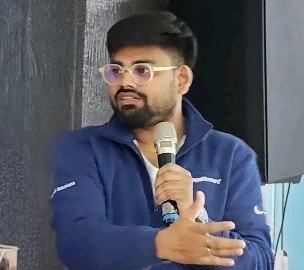
I am Abhijeet Banerjee a dedicated SEO Specialist focused on driving organic growth and improving search visibility. I use a data-driven approach to technical SEO, content strategy, and link building to deliver measurable results and increase ROI for clients and projects